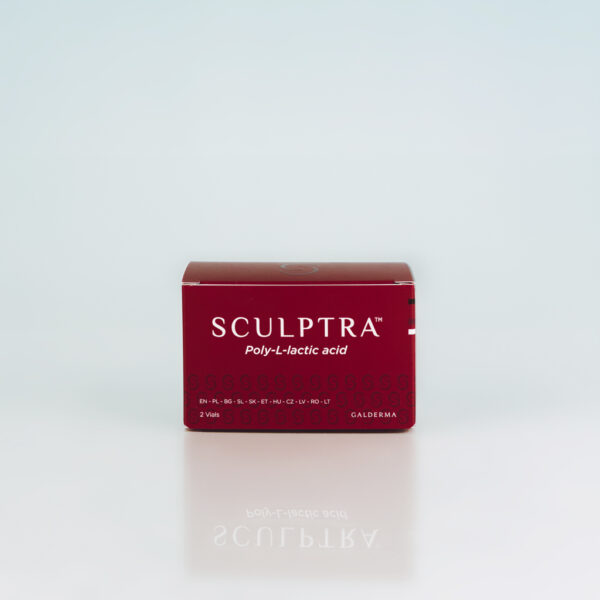
Buy products from Sculptra
Sculptra is a product from Galderma based on polylactic acid for collagen stimulation and gradual volume restoration. It is used in aesthetic medicine and is valued for its natural and long-lasting results.
Products from Sculptra at TopDermal
Price excl. VAT
€299.95
Price incl. VAT (23%)
€368.94
Sculptra: a PLLA-based collagen biostimulator
Sculptra is a collagen biostimulator built on poly-L-lactic acid (PLLA) technology. It is designed to prompt the body's own collagen production gradually, which sets it apart from fillers that add volume the moment they are placed.
How poly-L-lactic acid (PLLA) works
PLLA is a biocompatible, biodegradable synthetic polymer with a long record of use across medical applications. Once applied, it gradually stimulates the patient's own collagen production: as collagen levels build, skin structure, firmness and volume can improve step by step over time.
Sculptra compared with hyaluronic acid fillers
The key difference is mechanism. Sculptra works as a collagen stimulator, while hyaluronic acid fillers deliver volume immediately. Because Sculptra encourages the patient's own collagen to develop progressively, many practitioners treat it as one component of a complete facial rejuvenation programme rather than a direct substitute for a filler.
Protocol and typical treatment areas
Sculptra is usually administered across several sessions spaced over time, allowing the result to develop gradually. It is commonly used on areas such as the cheeks, temples and jawline, along with other regions affected by age-related volume loss. Session planning and area selection always remain the certified practitioner's decision.
Sculptra for professionals: format and ordering
TopDermal supplies Sculptra in professional format, with verified storage conditions and full traceability from the manufacturer through to dispatch.
- 100% original product, verified before dispatch
- Average EU delivery in 2-3 days
- Volume discounts for clinics
- Dedicated support for professional orders
Why buy Sculptra from TopDermal
We work exclusively with certified professionals and clinics, guaranteeing authenticity on every Sculptra order. Browse the full catalogue in the dermal fillers category.
Frequently Asked Questions
How does Sculptra work?
Sculptra works through poly-L-lactic acid (PLLA) technology. After treatment, the product gradually stimulates the body's natural collagen production process. As collagen levels increase, skin structure and volume may improve progressively over time. This collagen-stimulating approach makes Sculptra different from traditional fillers that primarily provide immediate volume through hyaluronic acid.
What is poly-L-lactic acid (PLLA) technology used in Sculptra?
Poly-L-lactic acid (PLLA) is a biocompatible and biodegradable synthetic polymer that has been used in medical applications for many years. In aesthetic medicine, PLLA is known for its collagen-stimulating properties, helping to support the skin’s natural regenerative processes. Sculptra is based on PLLA technology, making it a popular option for professionals seeking collagen induction treatments.
What makes Sculptra different from hyaluronic acid fillers?
The main difference is that Sculptra is a collagen stimulator rather than a hyaluronic acid filler. While hyaluronic acid fillers are typically used to provide immediate volume and contouring, Sculptra is designed to support the skin’s natural collagen production over time. For this reason, many aesthetic professionals consider Sculptra a complementary option within a comprehensive facial rejuvenation strategy.
Which treatment areas are commonly associated with Sculptra?
Sculptra is commonly associated with treatments aimed at improving facial volume, skin firmness, and overall skin quality. Depending on local regulations, clinical protocols, and practitioner expertise, it may be incorporated into treatment plans for areas such as the cheeks, temples, jawline, and other regions where age-related volume loss is a concern. Treatment approaches should always be determined by qualified healthcare professionals.
Why do aesthetic professionals choose Sculptra?
Aesthetic professionals choose Sculptra because of its collagen-stimulating technology, extensive clinical history, and global recognition within aesthetic medicine. The product is used in many countries and is valued by practitioners looking to incorporate collagen induction into their treatment protocols. Its unique mechanism of action makes it a popular option within modern facial rejuvenation and regenerative aesthetic approaches.

 Deutsch
  Русский
  Română
  Italiano
  Français
  Português
  Español